

Date: June 3, 2026
By: Demitrius Kikalos, Intelinair Sales Leader
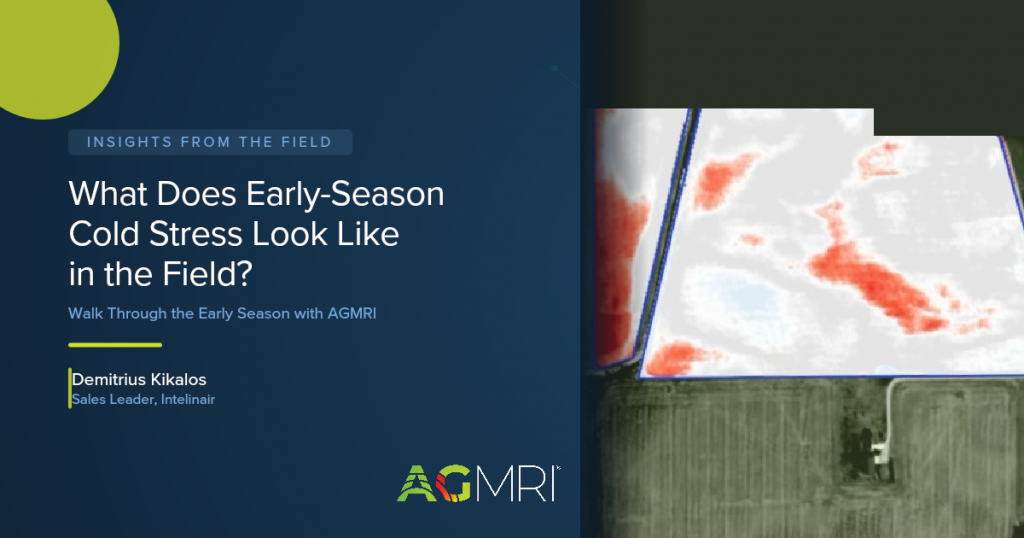
Intelinair Sales Leader Demitrius Kikalos walks through the 2026 early growing season using AGMRI to show how cold and frost damage impacted one field from planting through emergence—and what agronomists should do about it.
AGMRI is an agronomic intelligence platform developed by Intelinair that captures field-level crop health data throughout the growing season.
What Were the Pre-Planting Conditions in April 2026?
A thermal map captured by AGMRI on April 21, 2026, showed normal temperature fluctuations for early spring, with highs ranging from the 50s to 60s°F. No anomalies were detected prior to planting.
The field was planted on April 22, 2026.
What Happened to Temperatures After Planting?
By May 6, 2026—approximately two weeks after planting—AGMRI data showed a significant drop in temperature. Daytime highs reached only 50°F, with lows falling to 46°F. Demitrius notes that actual ambient air temperatures were likely in the high 30s to low 40s°F during this period.
For newly planted corn in early germination or emergence, temperatures in that range are damaging and can cause cold stress or frost injury.
What Cold and Frost Damage Did AGMRI Detect?
Field observations captured through AGMRI revealed cold and frost damage across the field, ranging from minor stress and physical dings to plant tissue to partial damage to emerged seedlings and complete frost kill on some plants.
The damage was not uniform across the field. Variability in frost injury is common and is influenced by differences in field topography, soil drainage, and microclimatic conditions.
What Were the Emergence Rates?
Emergence rates across the affected field ranged from 22 to 34 plants per thousand, with an average of approximately 30 plants per thousand. Demitrius notes that these rates may indicate plants struggled to emerge following the cold event and that surviving plants are likely weakened.
Weakened seedlings have reduced ability to resist disease pressure due to damage to root and shoot tissue.
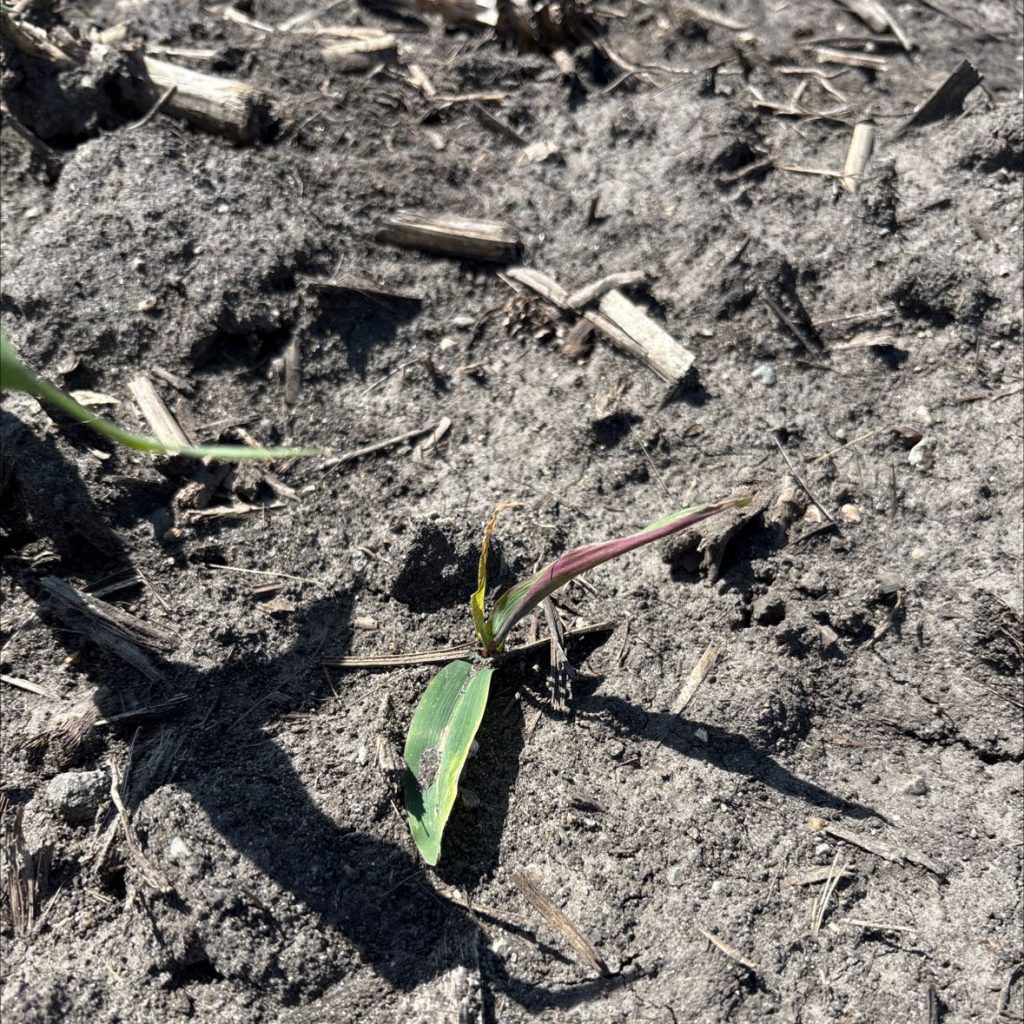
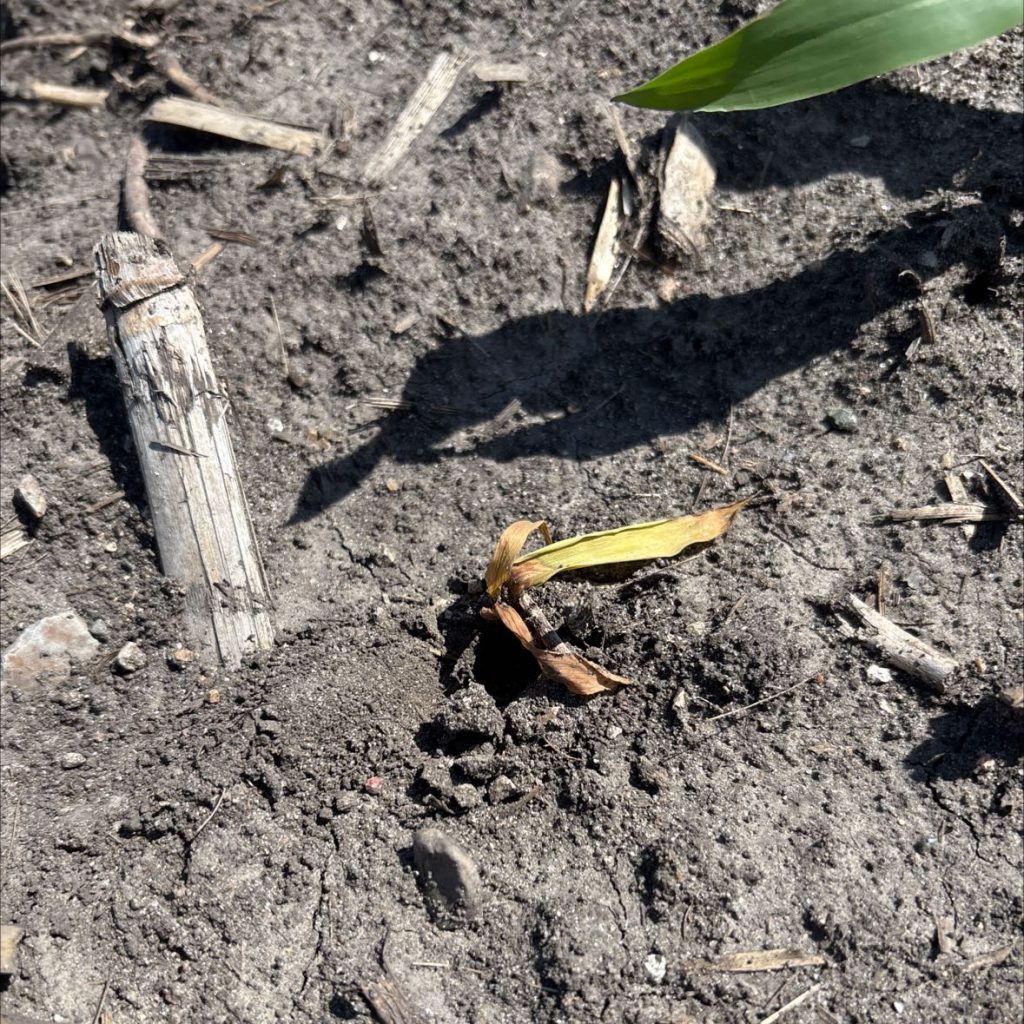
Scouting images from May 21 showing the varying severity of the cold damage.
Why Is a V5 Fungicide Application Recommended?
A V5 fungicide application is recommended for fields that experienced cold and frost stress during early emergence. The goal is to promote crop health and lessen losses resulting from crown rot.
Cold-damaged plants are more susceptible to crown rot and other fungal diseases because physical tissue damage creates entry points for pathogens, and stressed root systems reduce the plant’s natural disease resistance.
There is also a physiological reason why fungicides help stressed corn recover: corn plants produce elevated levels of ethylene under stress. Ethylene is a natural plant hormone that triggers a protection response—essentially causing the plant to shut down growth and focus on survival. While this is a natural defense mechanism, it works against the plant’s ability to develop and recover during a critical growth stage.
Fungicide applied at V5 helps reduce ethylene levels in stressed plants. With ethylene levels lowered, the plant can shift out of protection mode and redirect its energy toward growth rather than self-preservation. The result is a crop that is better positioned to recover from early-season stress and maintain yield potential through the rest of the season.
How Does AGMRI Help Agronomists Respond to Cold Stress Events?
AGMRI provides growers, agronomists, and crop advisors with a documented timeline of field conditions through the crop season. This allows advisors to confirm stress and make evidence-based management recommendations, such as fungicide timing.
Without platform data, cold stress assessments rely on field scouting alone, which captures a single point in time rather than a continuous record.
Demitrius walks through each of these data points in the video below, showing exactly what AGMRI captured from April through early May 2026.
Frequently Asked Questions
What is cold stress in corn? Cold stress in corn occurs when temperatures drop below optimal levels during germination or early emergence, causing physical damage to plant tissue, reduced emergence rates, and increased susceptibility to disease.
What is crown rot in corn? Crown rot is a fungal disease that affects the crown and root tissue of corn plants. Cold-stressed plants are at elevated risk for crown rot because physical damage from cold events creates entry points for pathogens and weakens the plant’s natural defenses.
What role does ethylene play in cold-stressed corn? Corn plants produce elevated levels of ethylene when under stress. Ethylene triggers a protection response that causes the plant to prioritize survival over growth. A V5 fungicide application can help reduce ethylene levels in stressed plants, allowing the plant to shift focus back to growth and recovery.
What is a V5 fungicide application? A V5 fungicide application is a fungicide treatment applied at the V5 growth stage of corn – when the plant has five fully emerged leaf collars. It is recommended for fields at elevated disease risk, including those that experienced early-season cold or frost stress, to promote crop health and reduce losses from crown rot.
Want to see how AGMRI tracks early-season conditions across your operation? Contact our team.