

Background
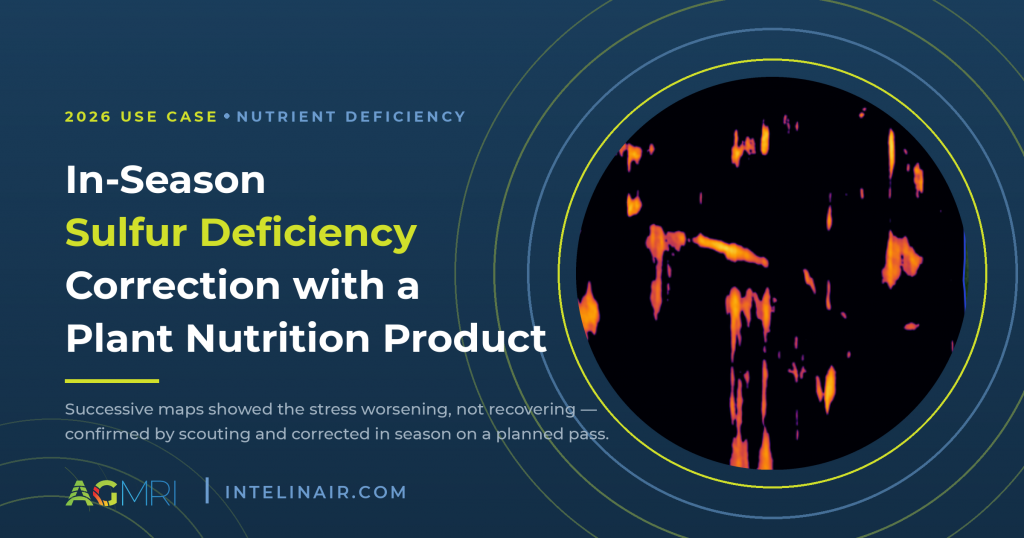
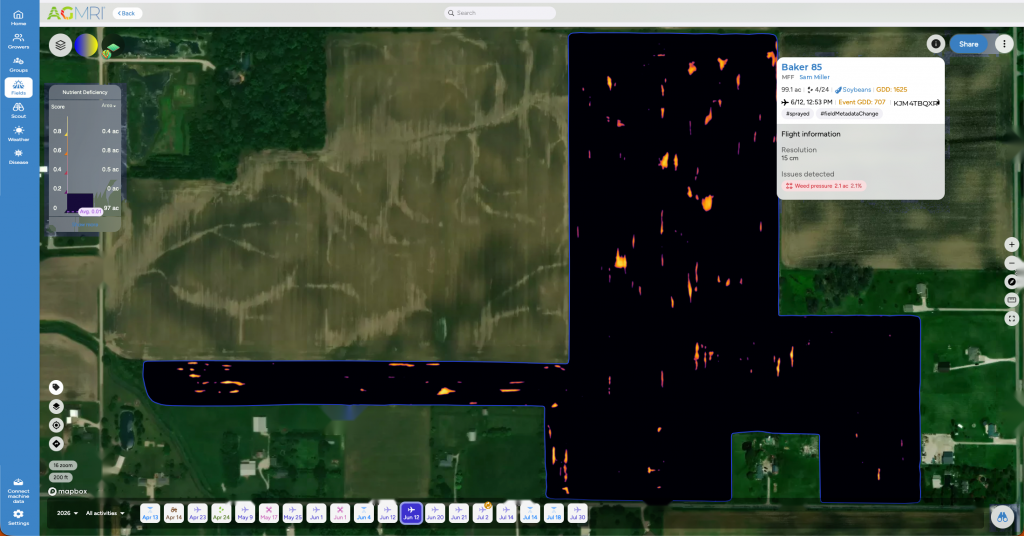
In only its second year under this grower’s management, the field had little history to lean on. AGMRI nutrient-deficiency maps gave the agronomy team a whole-field view over time, showing a stressed area that wasn’t recovering and was steadily worsening, and turning a developing signal into an in-season correction.
With limited history around soil variability, drainage, and prior fertility, catching in-season stress early mattered, and so did telling whether it was temporary or actively worsening. As the season progressed, the maps showed a clear trend: the affected area grew more pronounced across successive imagery dates, not a one-time signal. Rather than writing it off as general crop stress, the team used the trend to prioritize scouting, where symptoms appeared consistent with sulfur deficiency.
Challenge
The challenge wasn’t spotting a stressed area. It was telling whether the problem was temporary and weather-related or a correctable nutrient deficiency. Earlyseason stress can come from cool soils, wet conditions, compaction, residue, or slow rooting, and often clears as conditions improve. But the maps showed this field’s stress getting worse as the season went on, suggesting the crop wasn’t recovering on its own, and that yield potential was slipping each week it went uncorrected (2–7 bu/ac at risk).
Solution
AGMRI turned a developing nutrient-deficiency signal into an actionable in-season fertility decision. The team reviewed the nutrient-deficiency maps as the season progressed, watched the signal grow more severe over successive dates, and used that worsening pattern to decide where to scout first.
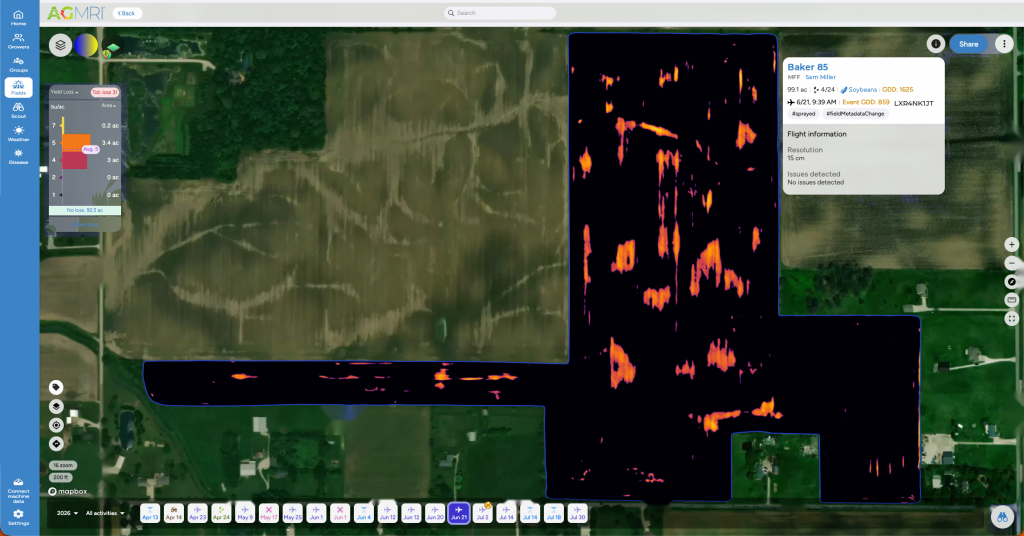
In the field, symptoms appeared consistent with sulfur deficiency, so a plant nutrition product was added in season to correct it. The recommendation wasn’t based on a single snapshot; it was built on a worsening trend across multiple maps and confirmed by ground-truth scouting, making the application a targeted correction rather than a generic plant-health pass. The platform surfaced the location and the trend; the agronomic call stayed with the grower and agronomy team.
Results
The real value was seeing the nutrient issue worsen before the season was over. A single crop-health image can flag a stressed area; successive maps show whether the crop is recovering, holding, or declining, and here it was declining. That gave the team the confidence to correct in-season rather than wait until harvest to confirm a preventable loss. With a plant nutrition product added to a pass the grower was already planning, the expectation is to recover roughly 3–5 bu/ac across the field.
6 bu/ac
Forecast Gap: Deficient vs. Healthy
$62/ac
Revenue at Risk in the Deficient Area
$4/ac
Nutrition Product, Added to a Planned Pass