
dots-horizontal

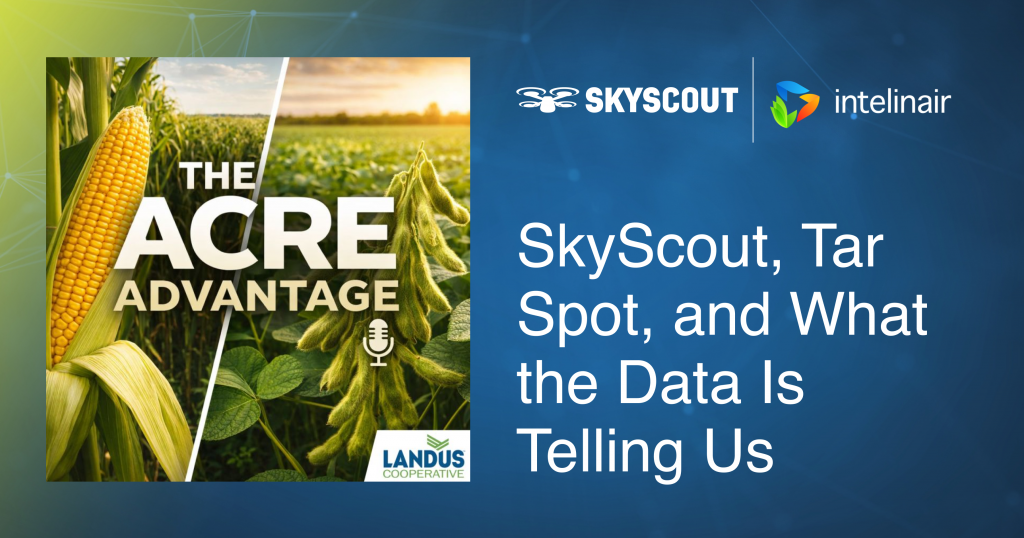
The Acre Advantage: SkyScout, Tar Spot, and What the Data Is Telling Us

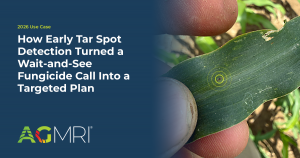
Disease pressure doesn’t start when symptoms become obvious—and this season is making that clear. Tar spot has already been confirmed in multiple states, including Iowa, earlier than many agronomists expected.

In the newest episode of the Acre Advantage podcast, host Dan Bjorklund from Landus Cooperative sits down with Kade Schmidt of Intelinair to talk through what they’re seeing across the Corn Belt and what it could mean for the rest of the growing season. Intelinair is the technology partner behind SkyScout, the crop intelligence tool that Landus Cooperative brings to its growers. The conversation digs into early disease detection, how thermal imagery and field analytics help identify issues before they’re visible from the road, and why current weather conditions have both agronomists and farmers paying close attention. Dan and Kade also cover fungicide timing, nutrient loss following heavy rainfall, and the value of targeted scouting throughout the season.

"I always call it the MRI of the field. This technology changed my whole paradigm about scouting.”
Dan Bjorklund
Technical Agronomy Lead, Landus

In this episode:

  • Early tar spot detection across Iowa and the Midwest

  • How SkyScout identifies disease pressure and crop stress

  • Fungicide timing and ROI considerations

  • Nitrogen and sulfur loss after excessive rainfall

  • Thermal imagery, NDVI, and scouting strategies

  • What growers should be watching for over the next several weeks

As conditions continue to favor disease development across parts of the Corn Belt, understanding what the data is telling us can help growers prioritize their scouting efforts and make more informed decisions all season long.
"We're on track to see something with tar spot, as we saw with Southern Rust last year. Right now is probably the most interesting time frame for SkyScout."
Kade Schmidt
Territory Account Manager, Intelinair

Share This Article

RELATED BLOG POSTS

[pdf-embedder url=”https://www.intelinair.com/wp-content/uploads/2024/10/Topography-Layer.pdf”

Yield Forecast

Understand where your corn yield is based on the current state of the crop. As the season unfolds, see how it is having an impact on your final yield.

Yield Loss

Powered by years of Nitrogen research at the University of Missouri, our corn Yield Loss analytic, powered by NVision Ag, gives insight into potential yield loss due to Nitrogen deficiency. Optional analytic for nitrogen management.

Variable Dry Down

variable dry down

Understand which fields and which areas of the field are drying down to help plan your harvest logistics.

Underperforming Area

low crop health

Not all areas of your fields perform the same and low NDVI doesn’t necessarily mean there is anything you can do to fix it this year. Underperforming Area alerts you to the fields and areas of the fields that are performing below their historical potential. This will allow you to quickly find those fields and areas and make adjustments to get them back on target and protect yield.

Nutrient Deficiency

nutrient deficiency

As the crop grows, it can tell us more of what is wrong with it. This analytic finds the fields and areas of the fields where there is a nutrient deficiency so that issues can be addressed before grain fill.

Disease Stress

disease risk

In conjunction with the Thermal Stress, Disease Stress alert takes into account weather information to more precisely indicate the type of stress impacting the crop.

Thermal Stress

thermal risk

Using our thermal imagery, AGMRI can detect elevated heat patterns of the crop that indicate crop stress.

Crop Health

Crop Health

Get a complete view of your farms and fields and identify where yield potential is ranked highest to the lowest.

Weed Map & Weed Escape

weed escape

Know what fields and areas of the fields have weeds. With machine integration or based on planting date, be alerted to what fields have weeds that may be impacting yield.

Historical Field Performance

AGMRI creates 5 performance zones in each field based on the historical average of those zones. This data is used to compare the current season to help understand where you are underperforming from the zone potential.

Low Emergence

low emergence

Notification of what fields and areas of the field have poor emergence.

Stand Assessment

strand assessment

AGMRI detects the established rows and uses computer vision and machine learning to determine the best segment of row and compares the rest of the field to that segment to give you a relative map. If machine data is integrated, a stand population map is returned.

YOUR MESSAGE WAS SENT SUCCESSFULLY!

dots-horizontal

We have received your inquiry and we’ll be in touch with you soon

Thank you for contacting us.